
In the fast-paced world of financial markets, leverage is perhaps the most misunderstood and frequently misused tool available to traders. At its simplest, leverage is the practice of using borrowed capital to increase the potential return on an investment. It allows a trader to control a large position in a financial asset with a relatively small amount of their own money. While the concept of amplifying gains is naturally attractive, the reality of leverage is far more nuanced. It serves as a powerful multiplier that can either accelerate wealth accumulation or lead to the rapid destruction of trading capital.
How Leverage Functions in Practice
When you open a leveraged position, you are essentially entering into an agreement with a broker. The broker provides the majority of the capital required to hold the position, while you provide a smaller portion, known as the margin or initial deposit. For example, if you have a leverage ratio of 10-to-1, you can control a position worth 100,000 dollars by putting up only 10,000 dollars of your own money.
The profit or loss is calculated based on the total value of the position, not just the margin you provided. If the underlying asset moves in your favor by one percent, your 100,000 dollar position gains 1,000 dollars. In this scenario, your 10,000 dollar investment has effectively earned a 10 percent return. Conversely, if the asset moves against you by one percent, you lose 1,000 dollars, which represents a 10 percent loss on your original investment. This simple math demonstrates why leverage is both a boon for the successful trader and a death knell for the undisciplined one.
The Allure of Amplified Returns
The primary attraction of leverage is the ability to maximize the efficiency of capital. Traders who identify high-probability setups can achieve meaningful financial results without needing a massive account balance. This is particularly appealing in markets like foreign exchange or commodity futures, where price movements can sometimes be incremental. Without leverage, the capital requirements for these markets would be prohibitive for many retail participants.
Leverage also facilitates complex strategies like hedging. By using a small amount of capital to control a larger asset, a trader can hedge their existing portfolio against downside risk. This defensive use of leverage is starkly different from the aggressive, speculative use that often leads to ruin. When used as a strategic tool for risk management rather than a tool for greed, leverage provides flexibility that is otherwise unavailable.
The Inherent Dangers and Risk of Ruin
The most significant danger of leverage is the speed at which it can drain an account. Because losses are magnified in the same way as gains, a series of relatively minor market fluctuations can result in a margin call. A margin call occurs when your account equity falls below the broker’s required minimum, forcing the broker to liquidate your positions, often at the worst possible moment.
-
Psychological Pressure: Leveraged trading imposes a heavy toll on the mind. When you are trading with borrowed money, every tick of the market becomes emotionally significant. This stress often leads to panic selling, the abandonment of trading plans, and the pursuit of desperate trades to recover losses.
-
Over-Leveraging: The most common mistake is using the maximum leverage offered by a broker. Just because a broker allows a 50-to-1 ratio does not mean you should use it. Many traders fall into the trap of viewing high leverage as a standard operational requirement rather than a high-risk option.
-
The Mathematical Disadvantage: The deeper the hole you dig through leveraged losses, the harder it is to climb out. A 50 percent loss on a leveraged position requires a 100 percent gain just to get back to break-even. As the percentage of loss increases, the arithmetic required to recover becomes exponentially more difficult.
Asset Class Variations
Leverage is not applied uniformly across all financial markets. The mechanics and the risks differ significantly depending on the instrument:
-
Equities: Margin trading in stocks typically offers lower leverage ratios, often capped at 2-to-1 in regulated environments. This provides a safety buffer, as individual stocks can be highly volatile and prone to sudden gaps in price.
-
Forex: The currency market is known for extreme leverage, sometimes reaching ratios as high as 100-to-1 or more. Because currencies often move in smaller increments compared to stocks, brokers provide higher leverage to keep the markets active and liquid. However, this also makes forex one of the most dangerous arenas for inexperienced traders.
-
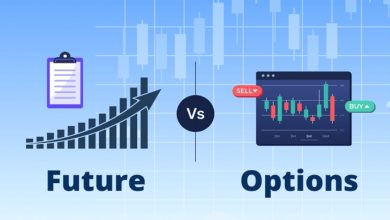
Futures and Options: These derivatives are inherently leveraged instruments. A futures contract is a commitment to buy or sell an asset at a future date for a predetermined price, and the margin required is only a small fraction of the contract’s total value. Options offer leverage through the payment of a premium, which controls a larger underlying share count.
Developing a Defensive Trading Strategy
To survive as a leveraged trader, you must prioritize capital preservation above all else. This requires a systematic approach that assumes the market will eventually move against you.
-
Define Risk per Trade: Never risk more than a small, fixed percentage of your total account balance on a single trade, regardless of the leverage ratio. A common recommendation is to cap your risk at one to two percent of your total account value.
-
Strict Stop-Loss Discipline: A stop-loss order is the only thing protecting your account from total wipeout. In a leveraged position, a stop-loss should be placed logically based on technical support or resistance, not based on the amount of money you are willing to lose.
-
Adjust Position Sizing: Calculate the size of your position based on the distance to your stop-loss, not the amount of leverage available. If you have 5,000 dollars and you want to risk 100 dollars, your position size should be determined by how far your stop-loss is from the entry price, regardless of the maximum leverage your broker allows.
-
Avoid Holding Overnight: Leveraged positions can be vulnerable to overnight market gaps. If you are not an experienced professional, consider closing your leveraged positions before the market closes to avoid the risk of sudden price spikes on news events occurring outside of market hours.
The Role of Broker Regulation
The broker you choose is a fundamental part of your risk management. Reputable, highly regulated brokers are required to provide clear disclosures about the risks of leverage. They are also subject to capital requirements that protect you from broker insolvency. Be extremely cautious of offshore brokers who entice traders with astronomical leverage ratios of 500-to-1 or 1,000-to-1. These brokers are essentially betting against you and hoping for your account to reach zero. A professional trader always prioritizes the safety and transparency of their brokerage firm over the availability of aggressive leverage.
Conclusion
Leverage is a tool of convenience and efficiency that, if respected, can allow a trader to manage risk and participate in markets effectively. However, it is never a substitute for trading skill or fundamental market knowledge. The traders who achieve longevity are those who view leverage as a dangerous utility, much like electricity or high-pressure steam. They treat it with caution, install safety mechanisms, and never allow their ambition to outpace their risk management. If you cannot make money without leverage, adding it to your strategy will not fix the problem; it will only accelerate the failure. True mastery in trading is found in the ability to generate consistent returns through careful analysis, not through the reckless amplification of exposure.
Frequently Asked Questions
Is it possible to trade without using any leverage?
Yes. In many markets, such as stocks, you can trade using only your own cash. This is known as a cash account. While you lose the ability to amplify your gains, you also eliminate the risk of margin calls and the pressure of borrowing costs, which is often the best choice for beginners.
What is a margin call and how does it happen?
A margin call occurs when your account value drops to a level where the broker decides that your existing capital is no longer sufficient to cover the potential losses of your open positions. The broker will notify you to add more funds immediately or they will forcefully close your trades to protect their own interests.
Why do some traders lose more money than they actually deposited?
In certain market conditions, such as extreme gaps or overnight crashes, a leveraged position can move so fast that the broker cannot close it at your stop-loss level. In such cases, the resulting loss can exceed the total balance of your account, leaving you with a negative balance that you are legally obligated to pay back to the broker.
Does the cost of borrowing money for leverage impact my profits?
Yes. Brokers charge interest on the capital they lend you for margin positions. If you hold a leveraged position for a long time, the interest fees can accumulate and significantly erode your potential profits. This is why leveraged trading is often better suited for shorter-term strategies.
Are there specific market conditions where leverage should be avoided?
You should be highly cautious when using leverage during periods of high market volatility, such as during major economic data releases or unexpected geopolitical events. During these times, prices can move violently and unpredictably, making it easy to hit your stop-loss or face a margin call in seconds.
How can I practice leveraged trading without risking real money?
Most reputable brokers offer demo accounts that mirror real market conditions. Using a demo account with the same leverage settings you plan to use in a live environment is the best way to understand the impact of margin on your decision-making and account balance without the actual financial risk.
Is leverage inherently unethical?
No. Leverage is a neutral financial instrument. It is widely used by corporations, institutional investors, and hedge funds to manage capital and mitigate risk. The ethical or unethical nature depends entirely on how the individual uses the tool and whether they are being honest with themselves about the risks involved.